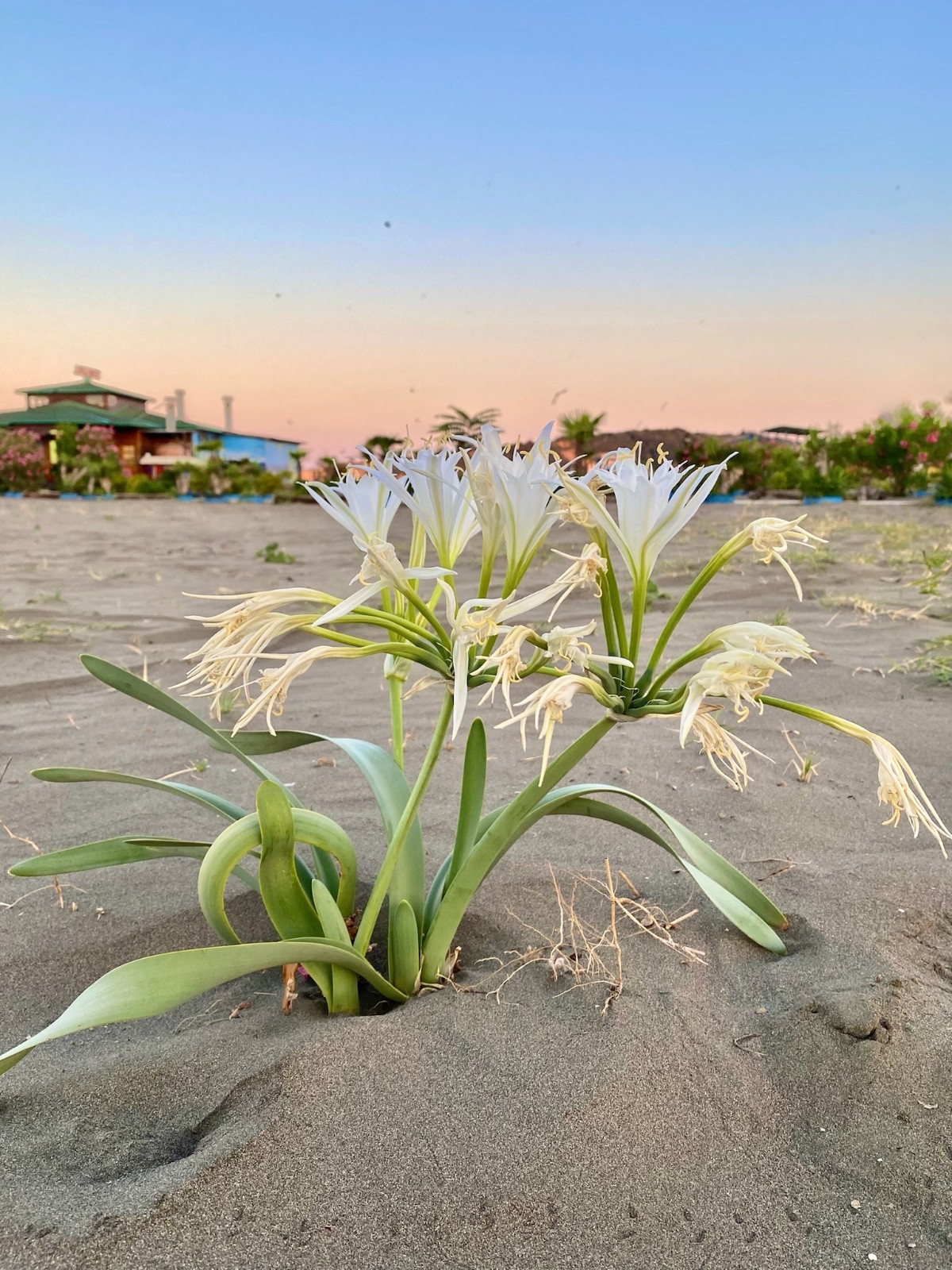
They turned to sand
These people turned to sand. I saw them – the way their color drained as they were trying to stop the girl. Their arms reached out to her but it was too late. The girl moved to her rhythm, clapping and tapping inside the unlocked van. Their arms went rigid. Their bodies, suspended in their moves, crumbled like old clay vessels. The wind picked up those mounds of sand and took them up to the Holy Mountain in tiny spinning whirlwinds. I don’t think it was the girl’s fault.
The girl appeared in town when she was still a baby, wrapped in her mother’s faded pink T-shirt. The woman settled on the corner of the cafe on the central square, stretching out her sand-covered hand.
“Got any change to spare?” she asked the passers-by. “I just need diapers for my daughter.”
“Such golden eyes,” people would say about the baby. “The child seems so active.”
The baby’s arms and legs stuck out of the T-shirt, twitching and shaking in one rhythm. A handful of sand would fly upward with every move.
Already then, people started choosing the cafe tables furthest from the corner where the woman sat.
“I don’t know how you do this,” the waiter said to her. “But can you sit somewhere else? I’m fed up with cleaning sand away.”
The woman would move a few steps to the side, but it changed little. The sand crept between the cobbles and into the cracks of the buildings around the square. People complained they had to comb the sand out after each walk across the square. So, as soon as her daughter learned to carry her body on her tiny legs, the woman pulled the pink T-shirt like a long dress over the girl and placed her on the sidewalk to beg alone. She watched her daughter from the shadows of the palm trees nearby.
The child collected more coins than her mother ever did – the girl danced. She clapped, tapped, stomped and spun to the rhythm that only she could hear, moving along the tables of the cafe. When coins dropped into her palm, her golden eyes would shine and she would smile. She never talked.
“Where’s your mom?” the waiter asked one day when he saw no figure under the palm trees.
The girl just clapped her hands and blew away the rising sand.
The waiter waved the sand off.
“Go dance somewhere else,” he said.
The girl spun away as the pink T-shirt, now knee length, floated around her like a bell.
The waiter picked up the broom and whooshed it over the cobbles where the girl had been.
“It’s not that bad,” I said.
The waiter shot me a look.
“Not that bad?” he asked. “You, sir, give my tips to that dancing beggar, while I sweep away the sand all day.”
He grated the chairs against the cobbles, bending down to reach under the tables while they were still empty. The table at the end was already taken by a woman in a wide-brimmed hat.
“Where’s the mayor even looking?” The waiter’s voice carried. “Oh, I know where. Of course, building that new monstrosity on the Holy Mountain is way more important.”
The voice came from the distant table.
“I’ll make sure he hears your concern,” the woman in the hat said, the shadow of the brim hiding her face.
The waiter banged his head against the table. Dropping his broom, he said, “Just for the record, I’m not against the stela on the mountain–”
“Of course you’re not,” the mayor’s wife said, rolling a grain of sand between her fingertips. “But you’re right about the sandy girl. I was told she even danced during the procession up the mountain last year?”
I cleared my throat. “She wasn’t harming anyone,” I said. “If anything she helped the pilgrims hold the rhythm.” I tried to chuckle but coughed instead.
The angle of her hat changed. Under the brim, the glossy scarlet lips stretched into a smile.
“Your misplaced kindness is going to help no one,” she said in a voice that sounded like the clinking of an empty glass.
And so it was on the day of the unveiling ceremony that it happened.
People shifted on their legs under the noon sun, hoping the mayor would soon stop talking. They came to see that metal bird, the helicopter on the square, lift the final piece toward the stela on the mountain peak. The pyramidal capstone sat draped in white cloth in front of them. The mayor said something about caring for the meek and poor, and the girl started clapping.
“Thank you,” the mayor said. “I have more to say–”
But the girl clapped on, stomping, spinning around, raising sand. People caught her hand and tried to keep her still, but then they pulled away and shook off their hands.
The glossy lips under the brim thinned to a scarlet thread. The mayor cast a glance at his wife and nodded to the police officer.
The officer cut through the crowd, which separated in front of him like waves. He grabbed the girl by the wrist and dragged her toward the van. She didn’t even mind at first. She continued stomping and waving her free hand in the air. It was after he locked her in the van, and the mayor resumed his speech, that her howl came. People no longer faced the mayor. They covered their ears and winced.
I edged toward the van.
“She’s never been in a closed space before,” I whispered to the officer. “It will be better for everybody if you let her go.”
The policeman lowered his chin at me.
“Step away, sir, or you’ll be the next one in that van.”
Through the bars, I could see her golden eyes filling with tears, as she swayed and howled in one rhythm.
I stepped aside and waited for the officer to look away. As soon as he did, I walked around the van, which started to vibrate. I tiptoed to the door and slid the bolt open. The door creaked as I looked inside. The girl rocked on the bench, her rhythm echoing from the metal walls. I felt its beats inside my own head, each new one more powerful than the one before. And then, just before the new beat came, a blow slammed into my head.
“I told you to keep away,” the voice said through the rising sand.
The grains on the ground scratched my cheek as the earth underneath me shuddered and jolted to the rhythm. People screamed. They rushed toward the van, reaching their pale arms out, but a moment later, they could no longer move, petrified. I blinked and they were just swirls of sand. The wind tossed the sand against the walls and spun it around the draped capstone. It lifted the sandy clouds toward the mountain peak, and everything went red.
Cool humid air woke me at dawn. I shivered under a piece of cloth. Tracing my hand over its surface, I realized it was the white cloth from the capstone. The capstone was gone. And so were the people. The wind rolled sand grains over the empty streets. The van stood gaping with its door wide open. Nobody was inside.
A chant came from the Holy Mountain. An orange zigzag of burning torches moved down the mountain trail in one shared rhythm. People were climbing down, chanting a prayer.
I watched them enter the town, their torches ablaze, but their eyes looking down. I tried to catch their gaze, but they didn’t look at me. They didn’t speak. They slid behind their doors, and the town went quiet. Only the cafe’s chairs grated against the cobbles in the morning street as the waiter prepared the tables for the day.
“Hey,” I said, limping to him. He looked at me. “What happened?” I asked.
He turned away and continued shifting the chairs.
These people walk across the square every day, clacking their feet against the cobbles. Their cups clink as they drink their coffee. But I noticed that they cower and hurry inside whenever the wind comes. I know they are just sand. I saw them.