The song of the limestone
The pile of rocks as sharp as dragon teeth rose at the end of the dirt road that was used only in summer. In winter, the place was white and endless like empty dreams. Only the winds kept singing melancholic tunes inside the rocks, just a few notes but they stopped wolves in their tracks.
The few locals who still lived nearby said the stones were the tomb of an ancient king’s daughter. She died young but had changed people’s lives. She played a flute. Her music stopped wars, and while the sounds carried, people felt only harmony and peace.
“It is a resting place of a powerful spirit,” the locals told the scientific expedition that came in summer. “It shouldn’t be disturbed.”
The scientists smiled politely, finished their teas and went back to work. The government had plans for the area – to unburden the shores by redirecting the tourists towards the mountains. The singing stones had to be explored, the safety of the surrounding mountain walls assessed and measured. Later a proper asphalt road would lead to this attraction, and adequate housing and cafes would be built.
One of the geologists brought his son along. He couldn’t leave the boy at home. No relative wanted to watch him because the child sleepwalked.
On the first night the boy disappeared. While everybody was searching for him, the boy dreamed of a girl, transparent like smoke. She sat on the rocks and played a flute, a rhythmic, hypnotic sound. The boy curled up beside her and closed his eyes. The music stopped and he heard her voice, abrupt and sad like trapped gusts of wind.
“Tell them to go away,” the girl said. “My destiny is to calm others. Every time you feel at peace, it’s me playing. But I can only give what I have. Don’t let them take my peace away.”
The boy was found sleeping at the rocks. All morning he tried to persuade his father to leave. The father was too busy watching the numbers from his seismometer to listen to the child’s dream.
The work went on. Like bright yellow bugs, the scientists climbed the lime rocks in their reflective jackets. The measuring tools prodded and poked the stones. The flower field now smelled of cigarettes. Birds got blown from bushes by laughter blasts.
At sunset the wind came. It started so abruptly as if someone had just flipped the switch. Tents flew into the air like leaves. The sharp rocks started screeching.
The boy’s father looked at the seismometer and said, “If we were near a volcano, I’d say it would erupt now.” The next moment it felt as if someone had smashed the Earth’s core with a giant hammer. The ground jumped in one focused shudder. The screeching mountain sighed out dust and collapsed. The air became quiet.
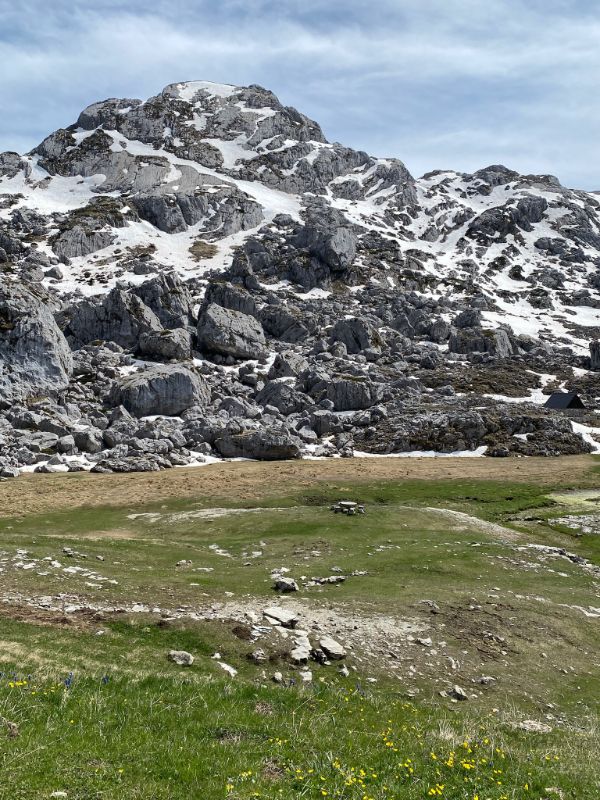
The expedition wrapped up and left in the morning. There were no more rocks to explore, no more attraction to develop. Only a flattened pile of limestone that looked like many other ancient tombs in the region.
What mesmerized the geologist was not the nature of the earthquake. It was his son. The boy no longer sleepwalked. He slept through the night almost like any other child. But every night the father sat near his son and listened to the hypnotic, rhythmic melody the boy hummed in his sleep.