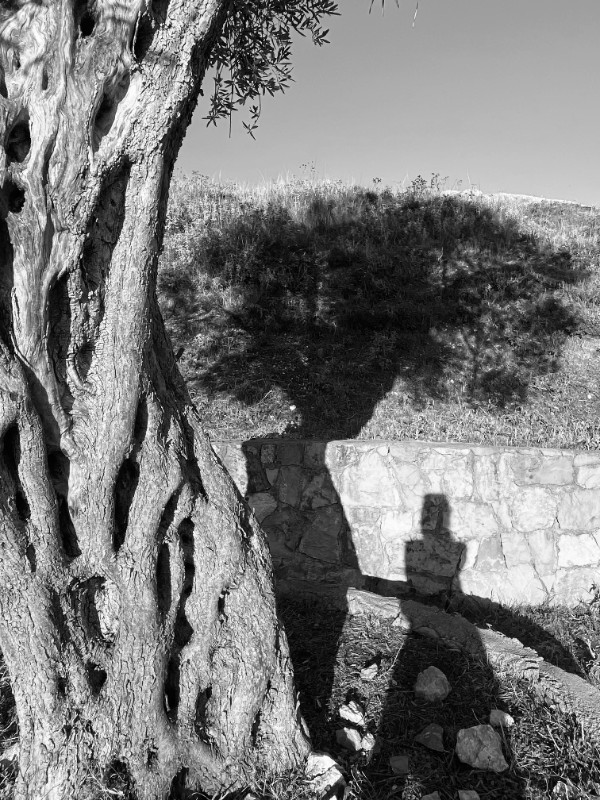
The road less walked
Wherever the Gray Coats appeared, people would disappear. One moment someone was there, and the next they were gone, pressed between two Gray Coats in the depths of a car the color of swamp. Never again would music come from their houses and no speck of undeclared color would blossom in their gardens.
People learned not to wear anything bright, not to speak loudly and not to look neighbors in the eye, for neighbors were dangerous. Neighbors could report anyone because otherwise neighbors themselves could vanish for reporting too late.
The Gray Coats wore wide hats that shaded their eyes even when there was no sun. They governed, watched, took care of order. The town was safe from any deviance, any intrusion of color.
It wasn’t always like that. The place used to resemble a kaleidoscope, so full of color and sunlight it was. The sunlight was also ruled as dangerous. The Gray Coats ordered the construction of a gigantic dome over the town so even the sun could be controlled. At first, people cast worried glances at the oldest tree in the town. Its thick branches spread over the central square like a living roof. People believed the tree protected them and their town. They used to gather under its branches for ceremonies but then the ceremonies, too, got outlawed. Would the old tree survive the eternal dusk? Thinking about this was painful, so people just stopped looking at the tree.
The woman lived alone. Each morning she left her sufficiently gray house, whose walls were washed back to concrete. To a passer-by she looked like anyone else – a gray dress, gray shoes, gray face looking down. She hurried along the cobbled streets as if on the same daily errands as everyone else. But something looked peculiar. At every corner she turned onto a quieter street. At every intersection she chose the road less walked.
“I saw her,” the neighbor said to his wife, peering outside through a dusty curtain. “It’s strange what she’s doing. Where does she go?”
“Where everybody else goes,” the wife answered, knitting with the brown thread that was still allowed.
“No,” he hissed. “She doesn’t. And that’s the problem. If they come for her, they’ll take us too.”
**
The Gray Coats came before dawn. They slid out of the car like shadows and knocked at her door. She didn’t look surprised. She walked out without taking anything. The curtain of her neighbors twitched once. A man behind the curtain trembled. He feared that reporting her wouldn’t be enough to save him.
The town returned to its rhythm at first. People’s heels clattered over the cobbles. Trams clanged along the streets. Machines huffed in factories, spitting out new pieces for the sky dome. One thing was odd, though. The tree on the central square dropped leaves too early in the season. A few days later its branches started turning black. A month after the woman vanished, the tree started swaying as if pushed by waves. That was when the town changed.
It started with water gurgling from faucets in the Ministry of the Gray Coats like intestines that couldn’t digest. Pipes joined that concert. The next moment the water burst like geysers from the floor. The Gray Coats ran around, knocking against each other because the wide hats blocked their vision.
Screams carried from the streets. Gray Coat units were sent to restore order in town. But it was no longer possible.
The mud seeped from the street drains, pushing up black clots of soil, leeches and roots. It formed a gigantic wave that rolled through the swamp-colored cars. Those Gray Coats that managed to leap out, lost their hats, and with the hats gone were their menacing looks. They climbed lampposts and tied themselves to the poles with their coats, waiting for the wave to pass. Their plan didn’t work when sinkholes opened. The ground swallowed them, along with posts and coats, and for a moment the street went silent.
Then the sky seemed to yawn and crack. The dome’s metal ribs swooshed through the air and struck the ground. A beam pierced a dull gray building whose windows looked like cages. When the dust settled, people crawled out through the gaps. The woman climbed out too.
The town lay demolished as if a giant walked over it in muddy shoes. People clawed through the wreckage, calling out names, while others froze, staring at the places where houses used to be. Nobody paid attention to the woman who took the turns that nobody was taking and hurried along the roads less walked. Every step led her farther from the center, until the ruins of the town were behind her.
**
She reached a stone bridge that was much older than the town. It grew over the river like part of the land itself. She slipped beneath the bridge where the air was damp and rocks were slippery. She pressed her palms against the darkest rock and felt a tremor run through it. The bridge wall loosened and swung inward like a door.
The air inside was thick but familiar. The rocks behind her swung shut and it became dark like before time began. She patted along the wall until she found the niche where she had kept her matches since they were first invented. They were handier than striking flint from rock. She picked up her torch from the wall and lit it. The red flame showed the labyrinth whose paths rolled deep like roots into the earth. She hadn’t walked them all yet. The light caught her own footprints in clay from millennia ago. She hurried down the path, towards the town center but now beneath it. The walls carried her whisper: “Let’s see how bad it got without me.”
At last she came to an underground room so large her torch couldn’t light all of it. There it stood, vast like the square that it was under, the massive trunk whose branches pierced the soil. They ran through the ground until they connected with something above, securing the whole town in its place. The woman didn’t know all the emerging branches in the town. She knew, of course, the tip of the tree on the central square.
The state of the tree was miserable. While she had been gone, the undercurrents brought new pebbles that stuck around the roots. They formed a dam that filled the underground passages with water and thus disrupted the whole water system of the town, causing the floods. Meanwhile, a part of the tree was left without any water. The bark had started cracking. Pieces as large as elephants were falling from one side, sending vibrations up the soil towards the town streets. Leeches multiplied and burrowed deep into the trunk where rotting set in. Black mold invaded cracks high between the branches so that some branches looked already dead. The woman wiped away her tears and set to work.
She moved the pebbles from the dam, redirecting the stream. She poked out the leeches. It took her a long time and several attempts, but she eventually managed to climb the trunk and scrub the mold from the branches. Thus, carefully, slowly, the work was being done, the tree was getting better. And so, above, the town was changing too. The water receded back into drains. The ground stopped shaking. The sun came out, bright and unhindered, and lit the broken world.