The island without corners
Their island had been baked deep in the heart of the planet, the locals said. There, in the heat, it swirled and twisted, loop after loop.
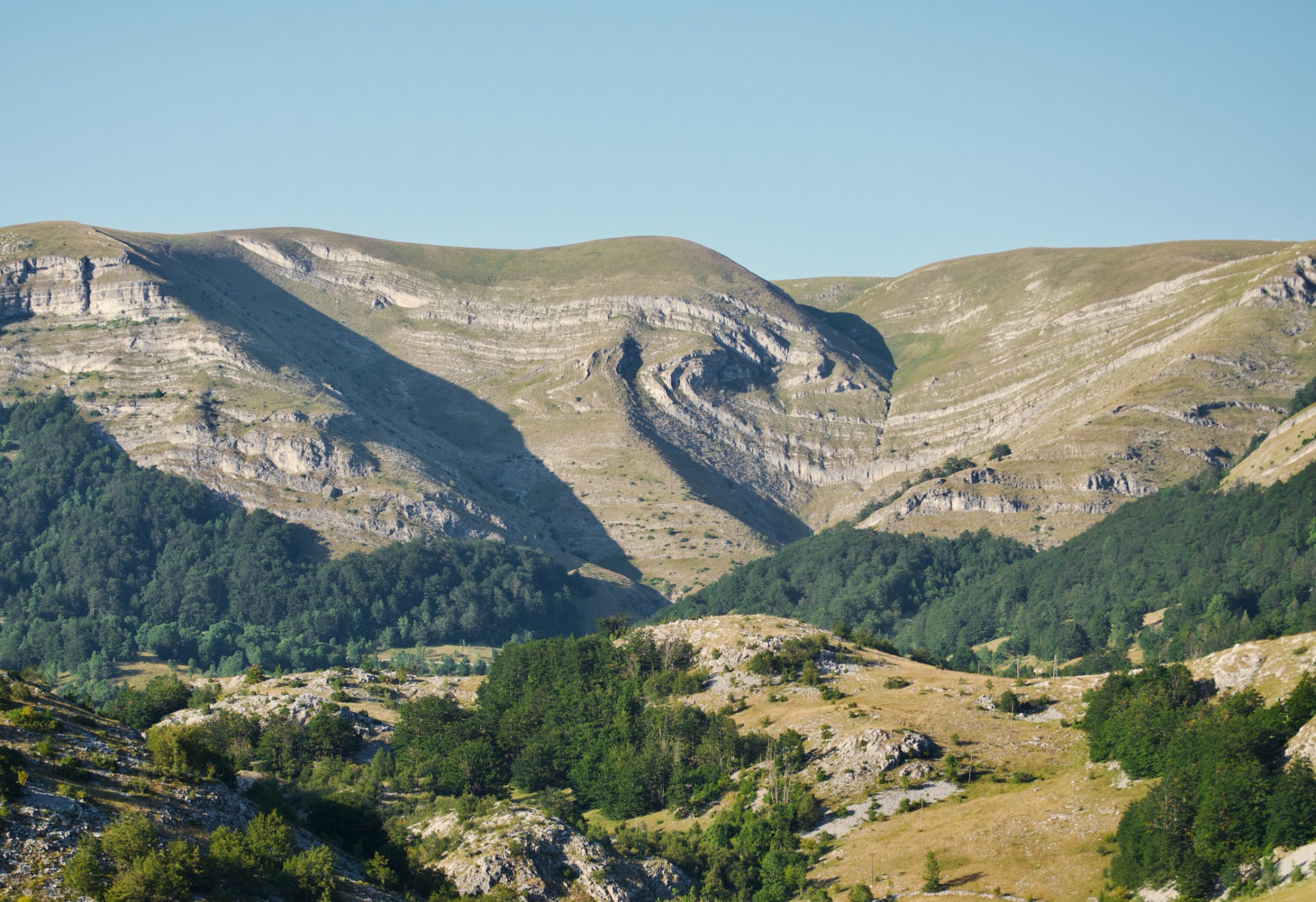
Then it emerged, their home, their island, their giant basalt snail. Layer upon layer the island rose towards the sky, without a single corner, a wonder of nature. But visitors bypassed the place. The island trembled constantly, several times a day. “Plate tectonics,” nodded the scientists on the continent. “The snail is preparing to move,” the islanders explained.
Generations of islanders grew up cut off from the culture of the main land. They created their own styles, their own culture. There were no other houses on the island except for oval and round ones. The furniture inside was also spherical – chairs, tables, beds, and even bookshelves. Who wants to bump into sharp corners in a house that cradles you like a moving train? And the people too had been shaped by the island. They walked with bent knees, arms outstretched, as if always balancing on a tightrope over an abyss. Their habits made it difficult for them to succeed in other cities. Although they were perfect surfers and never fell on trains.
A potter lived on the island. He was deaf, which made him exceptionally sensitive to vibrations. His work flourished because his ceramics were perfect for the island. His jugs were asymmetrical. The cups had no rims. The plates were long and wavy like mountain rivers. All these fit wonderfully with the shapes of the tables and also didn’t break teeth on impact at an unexpected bounce.
Recently, the potter began selling pots with pre-designed cracks, cups with holes, and plates that were missing bottoms. “So that energy can leave by predictable paths before the unpredictable ones shatter it,” he would say in his melodic voice. “Something is coming,” the villagers would say, looking at each other through the holes in their cups.
One day a yacht made of mirrors arrived. It docked in the island’s harbor and let off a man dressed like a schoolboy, wearing sunglasses that cost half an island.
“Hello,” the man said to the fisherman who was looking at his reflection in the yacht. The fisherman nodded to him, with bent knees and open arms.
“I’m your new neighbor,” the man said and extended his hand. “I’ll be staying here, on the island.”
The fisherman looked at the hand, nodded, and grabbed it like a fishing net. He also pointed to the shiny yacht and asked:
“Are you going to pull it ashore, neighbor?”
“What do you mean?” the man replied, politely flashing his white teeth. He noticed, however, that all other boats were pulled ashore.
“If the snail moves, this Christmas ornament of yours will capsize.”
“The snail, yes,” the man laughed as if he’d heard a joke, “My oracle predicted that your snail will be the only safe place at the end of times that are coming soon. So, don’t worry, my boat will be fine.” With that, the man walked up the winding road.
In town, he went to round shops and leafed through round postcards, but in the potter’s workshop, he lost his manners. He picked up a cup with the handle on the bottom and laughed so hard he nearly dropped the cup.
The potter took it from him and said in his melodic voice:
“What good is the bottom of a cup if you have nothing stable to put it on?”
As if to emphasize his words, the ground shook beneath their feet. The young man grabbed a round chair and rolled with it towards the door. A few pre-cracked saucers jumped down and broke along their predicted lines.
The potter gathered them, and while the house was still shaking and creaking, he asked:
“Do you want tea?” He limped away without waiting for a reply.
They watched the sunset in the garden, drinking their tea from five-handled cups. The young man explained why he had come. The potter couldn’t hear him, but he knew. For some time already, the snail had been shifting and rocking, preparing to set off. The world, as people knew it, was coming to an end. The potter stood up amidst the earthquake.
“I’m going to bed,” he said. “You can sleep on the sofa. Stay in my house until you learn to walk.”
A little later, the ground seemed to yawn. It stretched and twisted like a tired muscle. Leaves fell from the trees onto the man’s head. He gripped the trunk and looked down at his yacht. Like a disco ball, the yacht sent its last reflections from the sunset. Then it turned, nose-dived, capsized, and disappeared into the rising waves. The sunset suddenly rushed left, then right. Then it changed its mind completely and hid behind the island. The dark sky unleashed the wind. The world swayed. The snail was going to a better place.